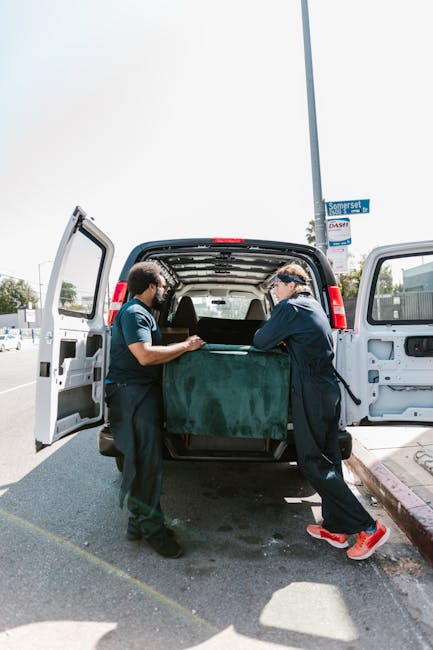
Man-and-van vs full removal van in Pimlico -- which to book?

If you are trying to decide between a man-and-van and a full removal van in Pimlico, you are probably weighing up the same handful of questions most people ask at this stage: how much do I have, how awkward is the property, how fast do I need it done, and what will it cost me once everything is added up? To be fair, Pimlico has a way of making a move feel smaller than it is. Flats look compact, streets can be tight, and then suddenly you are carrying more boxes than you expected down a staircase that seems to have grown overnight.
This guide breaks the choice down in plain English. You will see where a man-and-van service shines, when a full removal van is the safer bet, and how to judge the real practical difference rather than just the price on the screen. If you want to explore related moving options as you read, it can also help to look at broader removals services or the details on pricing and quotes so you can compare like with like.
Quick answer: choose a man-and-van for smaller, lighter, more flexible moves; choose a full removal van when the move is larger, the access is awkward, or you need a more complete loading-and-transport setup.
- Why this choice matters in Pimlico
- How each service works
- Key benefits and practical advantages
- Who each option suits best
- Step-by-step guidance
- Expert tips for a smoother move
- Common mistakes to avoid
- Tools, resources and recommendations
- Law, compliance and best practice
- Comparison table
- Real-world example
- Practical checklist
- Conclusion
- Frequently asked questions
Why Man-and-van vs full removal van in Pimlico -- which to book? Matters
The difference matters because the wrong choice usually creates one of two annoying outcomes: you overpay for more vehicle and labour than you needed, or you underbook and spend the day scrambling for extra trips, extra hands, and extra patience. Nobody wants a moving day that starts with optimism and ends with a half-empty kettle, a sore back, and a taxi receipt you did not plan for.
Pimlico is not the sort of place where a one-size-fits-all move feels clever. You may be dealing with mansion blocks, basement flats, narrow entrances, permit-sensitive streets, or loading that has to be timed carefully around neighbours and traffic. That means the vehicle choice is not just about capacity. It is about access, speed, handling, and how much stress you want on the day.
In practical terms, a man-and-van service is usually a lighter, more flexible setup. A full removal van tends to be a more complete moving solution, often better suited to bigger loads and more structured relocations. The right fit depends on the volume of belongings, the number of floors, the distance, and how much help you need with lifting and loading.
Let's face it: most moves look straightforward on paper and slightly chaotic in real life. The staircase is steeper than you remembered. The sofa is wider than the hallway. The packing is "almost done" until the night before. That is exactly why this choice deserves a proper look.
How Man-and-van vs full removal van in Pimlico -- which to book? Works
A man-and-van booking is usually the more flexible option. In simple terms, you are paying for a driver, a vehicle, and often help with lifting, carrying, and loading. It can suit small flat moves, single items, furniture collections, student relocations, or short-notice jobs where speed matters more than a fully staffed crew.
A full removal van booking generally gives you a bigger vehicle and often a more organised move. Depending on the provider, this may include more than one mover, better protection for bulky items, and a smoother process when you have a full flat or house to clear. If you are moving a bed, wardrobes, boxes, kitchen items, and a few awkward extras, that added structure can make a big difference.
In both cases, the quality of the planning matters as much as the vehicle itself. A small van can be excellent if the load is modest and access is easy. A full removal van can be a waste if you only have three boxes and a chair. On the other hand, a smaller setup becomes risky when the job quietly grows into something bigger halfway through. It happens more than people admit.
For moves involving furniture removal rather than a full household move, it can also help to look at furniture removals or even furniture pick-up if your job is really just one or two large items. That keeps the booking aligned with what you actually need, not what sounds convenient on the day.
Key Benefits and Practical Advantages
Each option has its own sweet spot. The best choice is rarely the cheapest headline price; it is the one that fits the shape of the move with the least friction.
Why people choose a man-and-van
- Flexibility: good for smaller loads, awkward timings, and short-notice moves.
- Lower overhead: you are not paying for a larger vehicle or an oversized crew when you do not need them.
- Simple logistics: often ideal for student rooms, studio flats, or single-item transport.
- Less vehicle to manage: in tighter Pimlico streets, a smaller van can be easier to position for loading.
Why people book a full removal van
- More capacity: helpful when you have furniture, boxes, appliances, and fragile items to move together.
- Better for full-property moves: especially if you are leaving a one-bedroom, two-bedroom, or larger property.
- More efficient in one trip: fewer returns, fewer handoffs, less time wasted.
- Better for complex moves: useful when access is awkward, the load is heavy, or you want a more complete service.
There is also a human benefit that people often overlook: confidence. When the vehicle size matches the job, the whole day feels calmer. Boxes are not piled in dangerous ways, furniture is not crammed in like a game of luggage Tetris, and the crew can work with a bit more rhythm. That matters more than people think.
Who This Is For and When It Makes Sense
If you are still unsure which way to go, the best clue is usually the size and shape of the job. Here is the honest version.
A man-and-van usually makes sense if you are:
- moving from a studio or very small flat
- transporting a few pieces of furniture
- moving a student room or shared-occupancy room
- clearing one property and dropping items into storage
- working with a tight budget and a manageable load
- booking a same-day or urgent move with limited volume
A full removal van usually makes sense if you are:
- moving a full flat or house
- taking several large items, including beds, wardrobes, and sofas
- moving with family members and lots of boxes
- trying to complete the move in one organised run
- dealing with difficult access, stairs, or a lot of packing material
- wanting the move handled as a more complete service
A good rule of thumb? If you can look around the room and say, "This is mostly a few bulky things and a manageable number of boxes," a man-and-van may be enough. If you are saying, "Where did all this come from?" then the full removal van is probably the safer route. There, that is the honest answer.
If you are moving a workspace rather than a home, it may also be worth reviewing commercial moves or office removals, because business moves tend to have different timing and handling needs.
Step-by-Step Guidance
If you want to choose well, do it in a methodical way. Not fancy. Just sensible.
- List what needs moving. Write down the big items first: bed, sofa, tables, drawers, appliances, boxes, bags, mirrors. If it does not fit on a list, it tends to disappear into the vague category of "probably fine," which is dangerous.
- Estimate volume honestly. Think about how much floor space your belongings would take up if grouped together. A small van is one thing. A larger living room's worth of furniture is another.
- Check access at both ends. Stairs, lifts, narrow hallways, parking, and loading restrictions can change the whole equation. In Pimlico, access can be the deciding factor.
- Decide how much help you need. Do you need someone to do the lifting, or just transport? A man-and-van can be perfect if you can help. A fuller service may be better if you cannot.
- Match vehicle size to the job. Bigger is not always better, but too small is a headache. The aim is comfortable fit, not heroic improvisation.
- Ask what is included. Loading, unloading, protective blankets, dismantling, reassembly, and packing can all affect the price and the outcome.
- Think about timing. If you need to finish before a lease handover, school run, or building access slot, a fuller setup may save time.
- Confirm your plan before moving day. Once the van arrives, you do not want to be debating whether the wardrobe is staying or going. Decide early.
When in doubt, ask for the provider's advice based on your actual inventory. Good movers are usually quite direct about whether a smaller van will do. If they hesitate, that is a clue in itself.
Expert Tips for Better Results
Here are the small things that make a moving day feel smoother. They are not glamorous, but they save time and friction. And sometimes that is the whole game.
- Pack by room, not by mood. Boxes labelled "misc" are the enemy of a calm unload.
- Keep essentials separate. Kettle, chargers, paperwork, medicine, keys, and a change of clothes should travel in a bag you can reach quickly.
- Protect awkward items early. Mirrors, lamps, framed artwork, and TV screens need more thought than people usually give them.
- Disassemble only what helps. Taking apart furniture can help loading, but only if you know how it goes back together. Screws in a bag. Always. Trust me on that one.
- Plan for parking and waiting time. In a busy London area, a van that has nowhere sensible to stop can slow the whole move.
- Use storage if the move is split. If your dates do not line up, a storage option can take the pressure off and stop the move from becoming a last-minute shuffle.
One small but useful tip: if you are moving from or into a furnished flat, decide early which items are definitely going and which are staying. A lot of people leave that decision until the van is outside. That is... not ideal. At that point everyone is already sweating a bit and pretending not to panic.
Common Mistakes to Avoid
Most moving problems are preventable. They come from underestimating, not from bad luck.
- Booking too small a vehicle. It seems cheaper until the second trip is needed.
- Ignoring access issues. A van size that works on paper can fail on a narrow street or with awkward parking.
- Forgetting about stairs and heavy items. One heavy wardrobe can change the whole job.
- Not checking insurance or handling terms. You want to know how fragile items are managed, not assume.
- Leaving packing too late. Packing under time pressure is how glassware becomes a memory.
- Choosing only on price. Cheapest can be fine. Cheapest and wrong usually is not.
A quiet but important mistake is assuming a man-and-van and a full removal van are just two labels for the same thing. They are not. The service style, load capacity, crew support, and time efficiency can differ quite a bit. If your move is borderline, it is usually wiser to choose the slightly more capable option than to hope the smaller one stretches. Hope is not a moving strategy.
Tools, Resources and Recommendations
You do not need a complicated toolkit for a successful move, but a few practical items make life easier.
- Strong boxes: use uniform, stackable boxes where possible.
- Packing tape and markers: clear labels save time at unloading.
- Furniture covers and blankets: useful for protecting wood, glass, and upholstery.
- Straps or ties: help keep items secure in the vehicle.
- Basic toolkit: screwdriver, Allen keys, and a small bag for fittings.
- Inventory list: simple but very effective when keeping track of everything.
If you are comparing service levels, it can help to look at man-and-van, removal van, and moving truck options in the same sitting, so you can see which one matches your load and timing. If you are moving a particularly fragile item, such as a piano, the specialist handling on piano removals is a useful reminder that some jobs deserve a more tailored approach.
For people who want the wider service picture, pages like home moves, flat removals, and student removals can also help you understand how the move might be handled depending on the property type.
Law, Compliance, Standards, or Best Practice
For moving services in London, the big practical compliance issues are usually not dramatic legal mysteries. They are the everyday basics: safe lifting, sensible loading, proper insurance, and respect for access rules, building rules, and parking restrictions. That sounds dull. It is not, though. It is what keeps the move from turning messy.
Good movers should be able to explain how they approach health and safety and what is covered under insurance and safety. If you are handing over valuable or fragile items, it is reasonable to ask about those details before you book. You do not need a lecture. Just clear answers.
Best practice also means being honest about access. If the property has no lift, if parking is awkward, or if there is a narrow staircase, say so upfront. That helps the mover plan the right vehicle and enough time. It is one of those tiny things that prevents bigger issues later.
On the business side, clear booking terms and payment arrangements matter too. Reviewing terms and conditions and payment and security can save confusion, especially if the move changes on the day or needs rescheduling.
If sustainability matters to you, you may also want to look at recycling and sustainability. A lot of moves create unwanted items, packaging waste, and old furniture decisions. It is nice when that is handled responsibly rather than dumped into the "deal with later" pile.
Options, Methods, or Comparison Table
Here is the simplest comparison. It is not about which is "better" in the abstract. It is about which is better for your situation in Pimlico.
| Factor | Man-and-van | Full removal van |
|---|---|---|
| Best for | Small moves, single items, student rooms, quick jobs | Full flats, larger homes, heavier or more complex moves |
| Vehicle size | Smaller and more flexible | Larger and more capable |
| Loading support | Usually lighter, simpler support | Often more structured loading and handling |
| Speed | Good for quick, uncomplicated jobs | Better when one efficient trip matters |
| Access challenges | Can work well on tight streets | Better if the job needs more capacity, even if access takes planning |
| Typical risk | Booking too small for the load | Paying for more than you need |
If you are moving somewhere like a compact Pimlico flat and only have a few larger items, the man-and-van option often feels refreshingly simple. If your place has filled up over years, though, a full removal van usually gives you the breathing room you need. Sometimes the honest answer is just: choose the less stressful option.
Case Study or Real-World Example
Imagine a couple moving out of a one-bedroom flat near central Pimlico. They have a bed frame, mattress, small sofa, dining table, a TV, six boxes, kitchen items, and a mirror. At first glance, they think a man-and-van should be fine. And it might be. But then they realise the bed frame does not fit neatly, the sofa is awkward to carry downstairs, and they have no lift.
In that situation, a man-and-van can still work if the crew is comfortable with the volume and access. Yet a full removal van may be the calmer choice because it gives more space for the items, more flexibility in stacking, and more confidence that everything will fit without rushing. The move becomes less about squeezing and more about loading properly.
Now compare that with a student leaving a small room with a suitcase, a desk chair, a couple of boxes, and a few kitchen bits. A full removal van would be overkill. A man-and-van is more sensible, probably faster, and easier to coordinate around the day's timetable. You see the pattern. The right choice is about proportionality.
If your move is mixed with decluttering, it can also be worth combining transport with house removals or house removalists where a more complete moving service is needed. That way you are not trying to force a small solution into a bigger job.
Practical Checklist
Use this checklist before you book. Simple, but effective.
- Count the major items you need moved.
- Check whether your property has stairs, lifts, or tight access.
- Estimate how many boxes you actually have, not how many you hoped to have.
- Decide whether you need lifting help or just transport.
- Think about whether one trip matters more than a lower upfront cost.
- Confirm your moving date, key collection time, and access window.
- Set aside essentials you will need on the day.
- Ask about insurance, handling, and any service exclusions.
- Review pricing and quote details before confirming the booking.
- If dates are awkward, consider storage as a buffer.
And one more thing: if you are on the fence, err slightly on the side of capacity. Not wildly. Just enough to avoid the kind of squeeze that makes everyone pretend they are fine while silently hating the wardrobe.
Get a free quote today and see how much you can save.
Conclusion
So, man-and-van vs full removal van in Pimlico -- which to book? The honest answer is that it depends on the size of the move, the access, and how much time and effort you want to spend on moving day. A man-and-van is usually the smart, nimble choice for smaller loads and simpler jobs. A full removal van is usually the safer, calmer choice for bigger moves, heavier furniture, or anything with awkward access.
If you remember only one thing, make it this: match the vehicle to the job, not the other way around. That one decision can save money, time, and a surprising amount of stress. And when you are already juggling boxes, keys, and a to-do list that somehow keeps growing, a little calm goes a long way.
Choose the option that feels properly sized for your life right now. That is usually the right one.
Frequently Asked Questions
Is a man-and-van enough for a one-bedroom flat in Pimlico?
It can be, but it depends on how much furniture you have and whether there are stairs, narrow hallways, or tricky parking. A lightly furnished one-bedroom flat may fit a man-and-van comfortably. A fuller one-bedroom move often needs a larger vehicle.
When should I book a full removal van instead?
Book a full removal van when you have several large items, lots of boxes, or you want the move completed in one efficient run. It is also the better option if access is awkward or you want a more structured moving setup.
Is man-and-van cheaper than a full removal van?
Usually, yes, because it tends to involve a smaller vehicle and a lighter service setup. But if the smaller option needs extra trips or takes much longer than expected, the lower upfront price can disappear pretty quickly.
What if I only have a few large items?
That is often the sweet spot for a man-and-van service, especially if the items are manageable and the access is straightforward. If the items are unusually heavy or delicate, a more specialised service may be better.
Do I need to help load the van?
Not always, but it depends on the service. Some man-and-van bookings assume you will help, while full removal services often provide more support. It is best to confirm this before booking so there are no awkward surprises on the day.
How do I know what size vehicle I need?
Start with your inventory: furniture, boxes, appliances, and anything awkward like mirrors or bikes. If you are unsure, describe the move item by item rather than saying it is "a normal amount." That phrase is never as helpful as people think.
Can a full removal van handle a same-day move?
Sometimes, yes. It depends on availability, timing, and how much planning the move needs. If your move is urgent, ask whether same-day removals are possible and be clear about access and load size.
What should I ask before I book?
Ask what is included, how many people are coming, how items are protected, whether insurance is in place, and whether there are any extra charges for stairs or long carries. Clear questions now usually prevent confusion later.
Does Pimlico parking make a difference?
Yes, very much. Parking and loading access can affect how quickly the move runs and which vehicle is practical. In tighter London streets, smaller vans are sometimes easier to position, but the right choice still depends on the total load.
Should I choose based on price alone?
No. Price matters, of course, but the cheapest option is not always the best value if it is too small or too limited for the job. A sensible booking is one that fits the move properly and keeps the day under control.
What if I need to store some items between moves?
Then storage can be a smart middle step. It is especially useful if your move-out and move-in dates do not line up cleanly, or if you are decluttering and not ready to commit every item to the new place yet.
How far in advance should I book?
As early as you can, especially if you are moving at a busy time of month or need a specific time slot. Short-notice bookings can still work, but your options may be narrower, and the exact vehicle size you want may not be available.
Is there a best option for flat moves in Pimlico?
For smaller flats, a man-and-van often works well. For a fully furnished flat, a full removal van is often the better choice. The best option depends on the volume, access, and how much lifting you want to avoid.